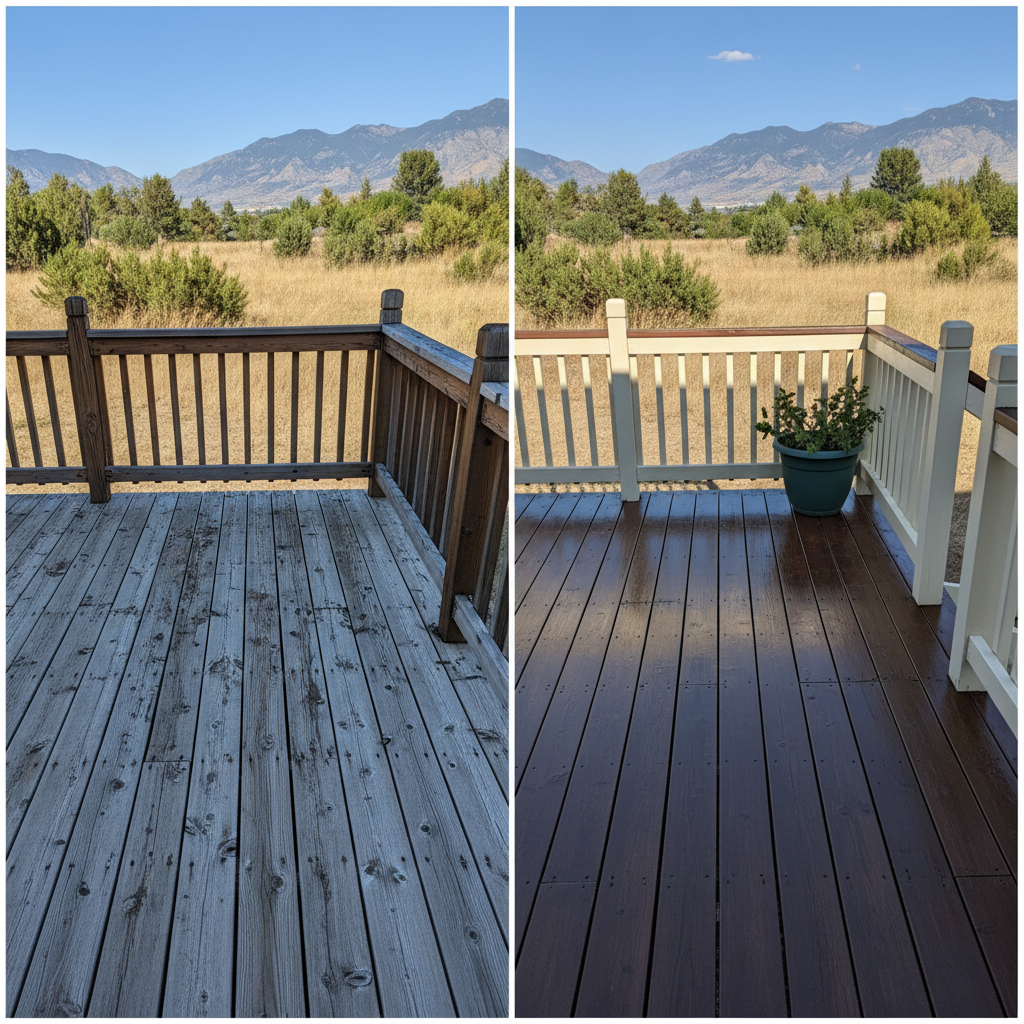
Deck Paint vs. Stain: What's the Real Deal?
So, you've got a deck, and it's looking a little tired. Maybe the wood's faded, or it just doesn't pop like it used to. The big question always comes up: should I paint it or stain it? It's not just about what looks good today; it's about what makes sense for the long haul, especially with our Ogden weather. As someone who's been around decks for a long time with Alpha Deck Co, I've seen both done right and done wrong. Let's get into it.
Appearance: What Look Are You Going For?
This is usually the first thing people think about, and it's a big one. Paint and stain give you completely different vibes.
Paint: If you want a solid, opaque color that completely covers the wood grain, paint is your guy. It's like putting a fresh coat on a wall, really. You can get pretty much any color under the sun, which is great if you want to match your house trim or go for a bold statement. The downside? You won't see any of that beautiful wood texture anymore. It'll look more like a floor than a natural wood surface.
Stain: Stains come in a few varieties, but generally, they let the wood grain show through. Even solid stains, which offer a lot of color, still have a more natural, wood-like finish than paint. Transparent and semi-transparent stains really highlight the natural beauty of the wood, enhancing its color while still letting the grain be the star. If you love the look of wood, stain is almost always the way to go.
Durability & Protection: Battling Ogden's Elements
This is where the rubber meets the road, especially with our hot summers and snowy winters here in Ogden. You need something that's going to hold up.
Paint: Paint forms a thick film on top of the wood. This sounds protective, right? And it is, initially. But that film is also prone to chipping, peeling, and cracking, especially in high-traffic areas or where it gets direct sun and then freezes. Once water gets under a chip, it can really start to lift the paint off in big sections. Repairing it often means scraping, sanding, and repainting large areas, which is a pain.
Stain: Stains, particularly penetrating stains, soak into the wood fibers rather than just sitting on top. This makes them much less likely to chip or peel. They wear down more gradually, usually by fading. When it's time to reapply, you often just need to clean the deck and put another coat on. You don't usually have to deal with all the scraping and stripping that comes with failed paint. This is a huge advantage for maintenance.
Maintenance & Lifespan: How Often Do You Want to Work?
Nobody wants to be redoing their deck every year. Let's talk about the long game.
Paint: A well-applied paint job might last 5-10 years before it needs a full overhaul. But remember, those chips and peels can start showing up much sooner, and if you don't address them, the problem just gets worse. You'll likely be doing touch-ups more frequently.
Stain: Depending on the type of stain (transparent, semi-transparent, solid), you're looking at needing to reapply every 1-5 years. Transparent stains need it more often, solid stains less so. But here's the kicker: reapplying stain is usually a much simpler process. Clean, dry, apply. No scraping, no priming, just a fresh coat. This makes the ongoing maintenance much easier to handle.
Cost: Upfront vs. Long-Term
Everyone's budget matters, and there are costs beyond just the can of stuff.
Paint: The materials for paint can sometimes be a bit more expensive per gallon than stain, and you often need a primer too. The biggest cost, though, comes in the labor for prep work. Scraping, sanding, and priming a painted deck takes a lot more time and effort than prepping for stain. If you're paying someone, that's more hours. If you're doing it yourself, that's more of your weekend gone.
Stain: While you might need to reapply stain more frequently, the prep work is usually less intensive. A good cleaning is often all you need. This means less labor cost over time, whether you're paying a pro or doing it yourself. The initial material cost might be similar or slightly less than paint.
My Recommendation for Ogden Homeowners
Look, I've seen a lot of decks get beat up by the sun beating down on the east bench, or the snow piling up in the winter. For most homeowners in Ogden, I'm going to lean towards stain every time.
Why? Because of the way it holds up. Paint looks great for a bit, but when it starts to fail, it fails ugly, and it's a huge headache to fix. Stain, because it penetrates the wood, handles our temperature swings and moisture much better. It fades gracefully, and when it's time to reapply, it's a much simpler job. You'll spend less time fighting with peeling paint and more time enjoying your deck.
If you really want a solid, opaque color, go for a high-quality solid color stain. You'll get the coverage you want, but with the better durability and easier maintenance of a stain. It's the best of both worlds for our climate.
Ultimately, it's your deck and your choice. But if you want something that's going to look good, protect your investment, and not become a constant chore, stain is usually the smarter play here in Northern Utah.